Last updated March 2, 2026
Learning French as a child is one of the best head starts you can give a young language learner. Kids pick up languages differently from how adults do. They absorb pronunciation naturally, they are not self-conscious about making mistakes, and they are much more willing to just play with a language until other speakers begin understanding them.
That development does not mean learning French for kids happens automatically or effortlessly, though. The right materials make a real difference. Kids learn best through repetition, variety, and fun, which means a single app or a single workbook is rarely enough on its own. A combination of games, audio exposure, stories, and some structured input tends to work much better than any one approach.
Below you will find the best resources for teaching French to children, organized by type.
Tips for Parents: Setting Up the Right Environment
Before getting into the specific resources, a few things that tend to make a bigger difference than any individual tool:
Consistency matters more than intensity. Twenty minutes a day, five days a week, will do more than two hours on a weekend. Short, regular sessions are how kids build the pattern-recognition that language learning depends on.
Mix listening with speaking. Many kids’ tools focus heavily on vocabulary recognition (reading and matching) without enough listening or speaking practice. French audio exposure (TV shows, songs, read-aloud audiobooks) should be a core part of the routine, not optional.
Learn the gender along with every noun. One of the differences between English and French is that French has grammatical gender, and it is much easier to learn the gender of a word the first time you encounter it than to go back and learn it later. Good apps and books will teach un chien or une maison from the start rather than just chien or maison. This matters more than it might seem.
Let kids make mistakes. The fear of making errors is one of the biggest obstacles for adult language learners, and kids generally do not have it yet. Protect that resilience! If you know French yourself, model the correct form or pronunciation rather than pointing out the error directly.
Kids’ Books for Learning French

Books with accompanying audio are particularly effective because they let your child hear words spoken by a native speaker while following along with the text. Here are some reliable options across different age groups.
For Babies/Toddlers
My First English-Français Learning Library by Wonder House Books is a set of 10 board books covering the essentials (alphabet, numbers, colors, animals, shapes, etc.) with real photographs labeled in both English and French. It’s designed for babies and toddlers, and the compact size makes it easy for small hands to hold.
For Young Children (ages 3–7):

My First French Word Book by Dorling Kindersley is one of the most popular illustrated vocabulary books for young children. It organizes words by theme, like the home, the garden, food, and animals, with clear illustrations and both French and English labels. It is a good reference to have on the shelf and to read through together.
Rosetta Stone’s French Picture Dictionary covers over 500 words and phrases organized by topic numbers, animals, food, family, and more, with colorful illustrations and QR codes throughout that link to native speaker audio, so kids can hear every word pronounced correctly as they go. It works well for both younger children and adults who want a visual reference to dip into alongside other study materials.
For Older Children (ages 7–12):
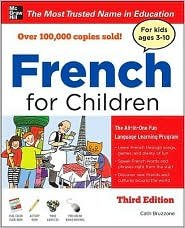
French for Children by Catherine Bruzzone and Louise Millar is a well-structured workbook series that introduces vocabulary and basic grammar concepts gradually. The format is visual and activity-based, which keeps it from feeling like homework. The full version comes with audio CDs, so make sure you have something to play them on.
Petit Nicolas by René Goscinny is a beloved French children’s book series about a boy and his friends. The language is natural, colloquial, and funny. There is a bilingual edition that make it accessible for learners who are not quite ready to read entirely in French. It is excellent for kids who are comfortable with the basics and ready for something that feels like a real book rather than a learning tool.
When buying French books for kids, look for:
- Audio files or CDs included (or available as a download). Many products still come with physical CDs.
- Clear illustrations paired with the vocabulary
- Labels that include the article (un, une, le, la) rather than just the noun on its own
Learn French Software and Apps for Kids
Kids’ French learning software has gotten very good at teaching vocabulary and basic phrases in a way that keeps children engaged. Most programs cover 200–800 French vocabulary words by the time the full course is completed, along with basic sentence patterns.
Mondly also has a kids’ version that uses games and short lessons to build vocabulary and basic phrases. The lessons are short enough to hold a child’s attention and structured enough to build genuine retention. It works well alongside the other tools listed here: a short Mondly session can be an easy way to start or end a study block.
Mobile Apps
Gus on the Go is a colorful vocabulary game for young children, available on Android, Apple, and Amazon Kindle. There is also an Apple-only storybook app in the same series.
Boukili is a French storybook app for kids available on Android, Apple, and in a browser-based version. Parents can track their child’s reading progress through the app, which is helpful for staying on top of how much time is actually being spent with the material.
French Board Games and Card Games for Kids

Board and card games that teach French have a practical advantage over screen-based tools: they involve other people. Playing a game in French with a parent, sibling, or a group of kids adds a social dimension to language learning that apps cannot replicate.
Most kids’ French games are designed to be accessible even at a basic level, so no prior knowledge is required to start playing.
Here are some well-reviewed options:
- French bingo: A classic format that works well for vocabulary reinforcement. Because bingo requires listening and matching, it is one of the better games for building word recognition rather than just passive vocabulary.
- French learning card game: A vocabulary-focused card game designed for young learners. Good for quick play sessions and easy to bring out at the dinner table.
- These French Talking Flash Cards involve a small handheld reader that reads special flashcards aloud in both English and French, with animal and vehicle sounds mixed in to keep younger kids engaged. The set covers 510 words across 31 themes, and because there’s no screen involved, it’s a good option for parents who want to limit device time without losing the audio component that makes vocabulary retention so much easier.
French TV Shows for Kids
Watching TV in French is one of the most underrated tools for young learners. Exposure to spoken French, like natural speech rhythms, connected sentences, and native speaker pronunciation, is something that workbooks and apps cannot fully replicate.

The goal at the beginning is not for kids to understand everything. It is to get comfortable with the sound of the language. Their comprehension will grow with time, just as it would for a native French speaking child.
All of the shows below are available on YouTube.
Mouk follows a raccoon named Mouk and his friend Chavapa as they travel the world. Each episode introduces a new culture and environment. The language is relatively simple and the visuals make it easy to follow even without understanding every word. Watch on YouTube
Petit Ours Brun follows a small brown bear as he explores the world around him. The episodes are short, the vocabulary is very basic, and the pace is gentle, making it ideal for young children who are just getting started. Watch on YouTube
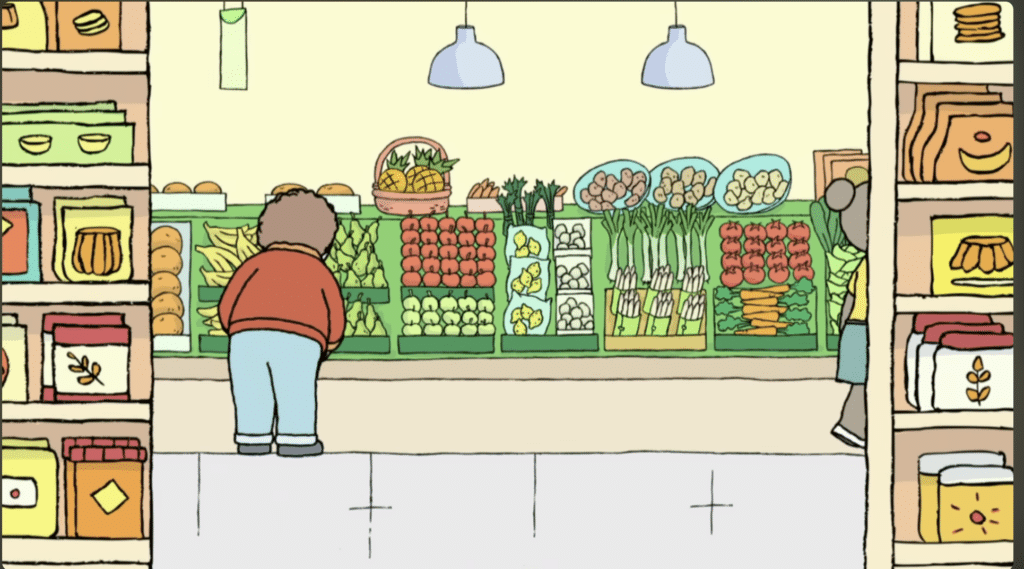
T’choupi is based on a popular French children’s book series and covers everyday experiences and works in vocabulary, numbers, colors, and shapes naturally into the stories. Good for ages 3–6. Watch on YouTube
Les Minijusticiers follows four young superheroes. The language is more conversational than the other shows here and the episodes move faster, so it is better suited to children who already have some exposure to French. Watch on YouTube
Free Online Resources for Kids Learning French
Happychild.org French hasn’t been updated in about 20 years, but it remains one of the most thorough free French resources for children on the internet. Vocabulary is organized by topic and sub-topic, and basic grammar is covered as well. It works well as a reference or supplement rather than a primary learning tool.
Quia French is a collection of over 7,000 user-submitted games and puzzles for learning French. Quality varies as on any site with user submissions, but the range is broad enough that you will find something useful for almost any vocabulary topic or difficulty level. You can also create your own games for free with a registered account.
Putting It Together to Help Kids Learn French
No single resource will do the whole job at teaching children French. The kids who learn French most effectively tend to have a mix: some structured input (an app or workbook), regular audio exposure (TV shows or audiobooks), and something interactive (a game or a conversation). Rotating between formats also keeps it from becoming repetitive.
The most important thing is keeping it low-pressure and consistent. French that feels like play tends to stick in a way that French that feels like homework rarely does.
If you are looking for more general guidance on how to approach learning French, including for adults learning alongside their children, our main French learning guide is a good starting point.