Mondly is one of the most widely used French learning apps, with over 50 million users worldwide and coverage of 41 languages. It was founded in 2013 and acquired by Pearson in 2022. The app is available on iOS, Android, and as a browser-based platform, and it offers both a free version and paid subscription plans.
Disclaimer: We were given premium access to Mondly for purposes of this review (we used the web version), but our opinions are ours. Here’s an honest picture of when Mondly is a good fit and when another tool might serve you better.
How Mondly Works
When you open Mondly, you land on a map-style dashboard dotted with topic pins. Each pin represents a themed lesson unit covering areas like travel, food, family, and work. Within each unit you’ll find six short lessons, a conversation exercise, and a vocabulary builder section. The lessons run 5 to 10 minutes each and mix several exercise formats: flashcards, fill-in-the-blank, translation prompts, matching exercises, speaking drills, and mock back-and-forth conversations.
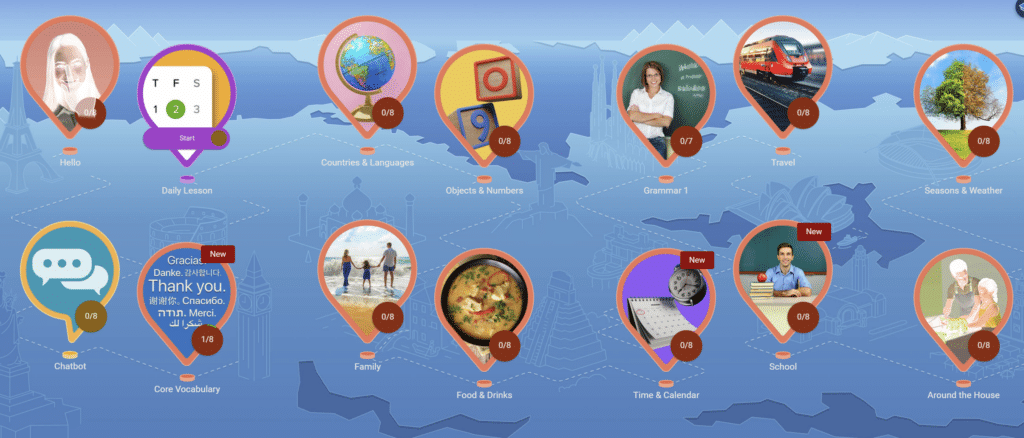
Alongside these themed units, Mondly pushes a daily lesson each day. This is the core of how the app is meant to be used: a short daily session to keep your streak alive and your vocabulary fresh. The gamification elements, including streaks, leaderboards, and weekly quizzes, are well designed and comparable to what you’d find in Duolingo. They’re really effective at building a daily habit.
Our Review
Mondly has a lot of positives. The app is very easy to pick up and pleasant to use. Pearson is a very well respected education brand, and we find the app approachable, the lesson length feels manageable for busy schedules, and the mix of exercise types keeps things from getting repetitive. It’s a good product for daily habit-building (the user experience is not that different from Duolingo, which readers might be more familiar with). It’s probably best used as a supplement between more intensive study sessions.
We also appreciate that they’re continuing to add new content. The most recent one at the time of writing is on business/workplace settings.
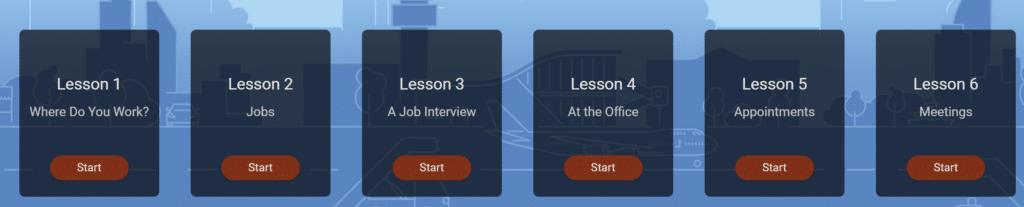
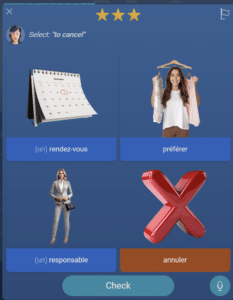
For each lesson, you’ll be introduced initially to about four vocabulary words, and then the lesson will expand about a word at a time over the course of that lesson. You can see annuler (“to cancel”) added to the existing vocabulary in the aforementioned business lesson in this screenshot, which is a good pace for helping you feel confident in mastering vocabulary while supporting your progression.
For the speaking tasks, you’ll be explicitly prompted for the phrase you should say in French, and after you speak, you will see which words registered correctly (in green), which were “almost” correct in orange, or you’ll be prompted to try speaking again if any of the words weren’t understood by the speech recognition feature.
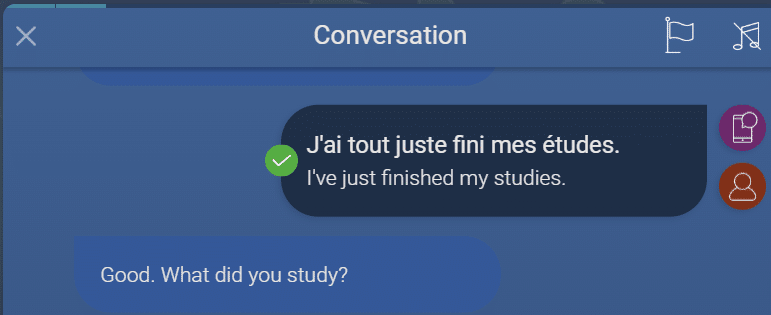
We also like the “Conversation” sub lesson, where you can record your audio and listen to it right after hearing the version spoken by a native speaker, although there is no “grading” or any way to know how close your French pronunciation is other than paying careful attention.
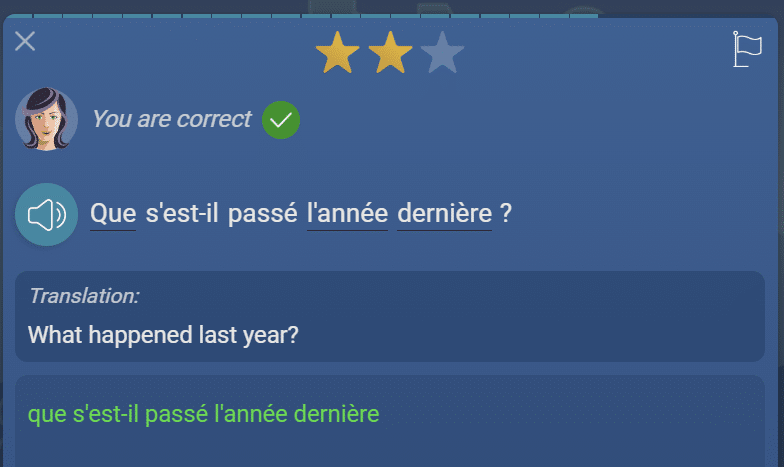
On the negative side, grammar explanations are minimal, and the course doesn’t deepen significantly as you advance through levels. We’re biased, in that this is a grammar-heavy site so we clearly believe grammar is important, but textbook-style explanations are very limited (again, not unsurprising for an app-based approach to language learning). Also, as the app currently stands, it’s really only for French beginners. Most intermediate French students will likely find themselves with limited new vocabulary they aren’t already familiar with.
We also wish there was a way to add some interactivity to the conversation tasks. Right now you’re just reading from a script (although it’s helpful to be able to listen to how your pronunciation and intonation compare to the native speaker’s).
Pricing
Mondly’s free version provides access to the first lesson block, a daily lesson, and the chatbot feature. It’s enough to evaluate the interface and format before committing to a paid plan, but not enough to make meaningful progress on its own.
Paid plans currently run approximately $10 per month, $48 per year (roughly $4 per month), or a lifetime access plan that regularly goes on sale for under $100. All paid plans cover all 41 languages, which makes Mondly an especially good value if you’re studying more than one language or plan to return to French after a break. Pearson frequently runs discounts of 50+%, so it’s worth checking the current pricing before purchasing.
Who Mondly Is a Good Fit For
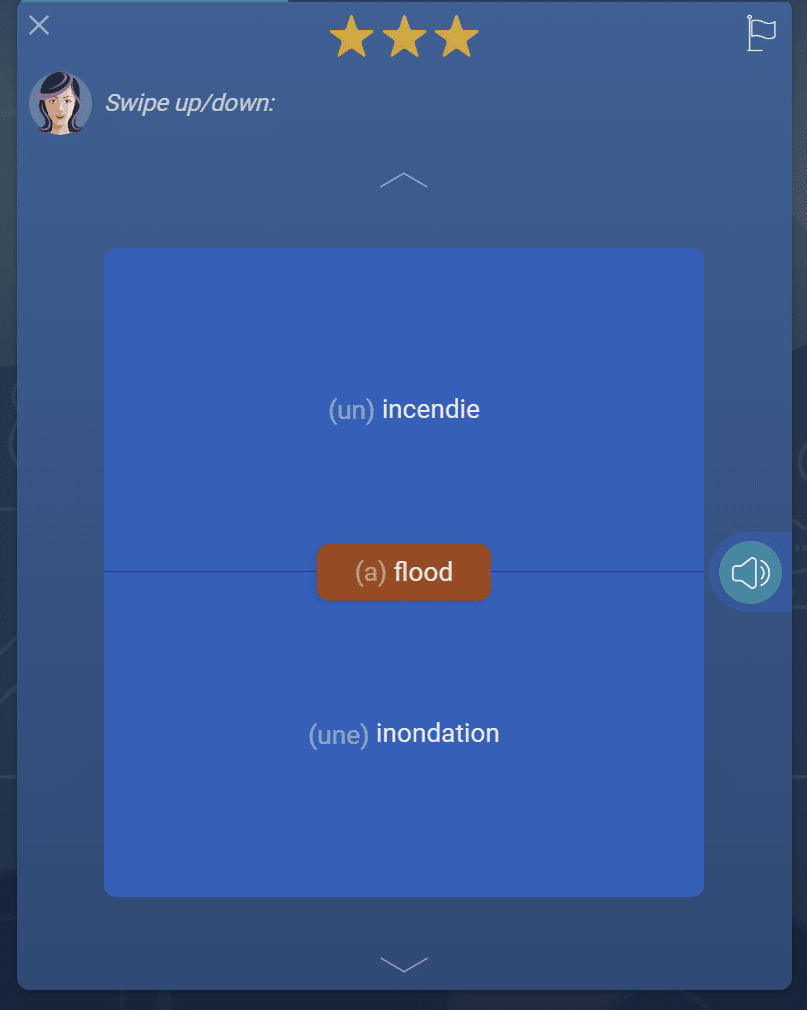
Mondly works best for learners who are at the beginning of their French study and want a low-pressure way to build vocabulary and a daily practice habit. If you’re fitting French into a busy schedule and need something you can realistically do for 10 minutes a day, Mondly delivers on that. It’s also a reasonable supplementary tool for intermediate learners who want to maintain vocabulary (we like the vocabular recap that you can select at the end of every lesson) while focusing their deeper study elsewhere.
It’s a weaker fit for learners who want to understand how French grammar actually works, who are already past the beginner level, or who want real conversation practice. For grammar instruction, the lessons on this site are a better resource. For speaking practice with a real French speaker, getting a tutor fills a gap that Mondly (or any app!) can’t.
How It Compares
Mondly sits in the same general category as Duolingo and Babbel: short daily lessons, gamification, mobile-first design. Compared to Duolingo, Mondly’s lesson content is slightly more practical and less game-like, and its pricing model (especially the lifetime option) is more favorable for learners who are going to stick with it. Compared to Babbel, Mondly covers more languages at a lower price, though Babbel tends to have more in-depth grammar explanations. Overall, Mondly is a habit app rather than a structured course, which means it requires less commitment to start but offers less depth overall.
The Bottom Line
Mondly is a solid, affordable tool for beginners who want to build a daily French habit and develop foundational vocabulary. It won’t replace structured grammar study or real conversation practice, and it’ll start to feel limiting around the intermediate level. But as one component of a broader approach to learning French, it delivers real value at a price that’s hard to argue with.
You can try Mondly’s free version at thefrenchpost.com/mondly. If you’re unsure whether Mondly is the right starting point for you, our overview of French learning software compares the major options side by side.